
About
Letrus was born in 2015, founded by Portuguese teachers who dreamed of making Brazil a more literate country. I had the pleasure of being one of the company's first designers and collaborating with the construction of some of its products. Letrus uses artificial intelligence to analyze students' texts and help them to increase their performance and level of expression in writing. Firstly launched a product for High School, Students and Teachers. Focused on preparing students for Enem’s exam’s to enter at Universities in Brazil. This product, which I’ve also had the pleasure to work won an international prize and made us very glad.
At the end of 2019, Letrus sent me and Vinícius Alves in a new adventure. Build the same product for kids with its own particular challenges.
Services
Research
Interface Design
Colaboration Facilitator
Team
Challenge
How do we create a platform easy to use, helpful in all the classes moments (before, during and after) and scalable for managing classes, activities and receiving reports from AI on textual productions of middle school students texts?
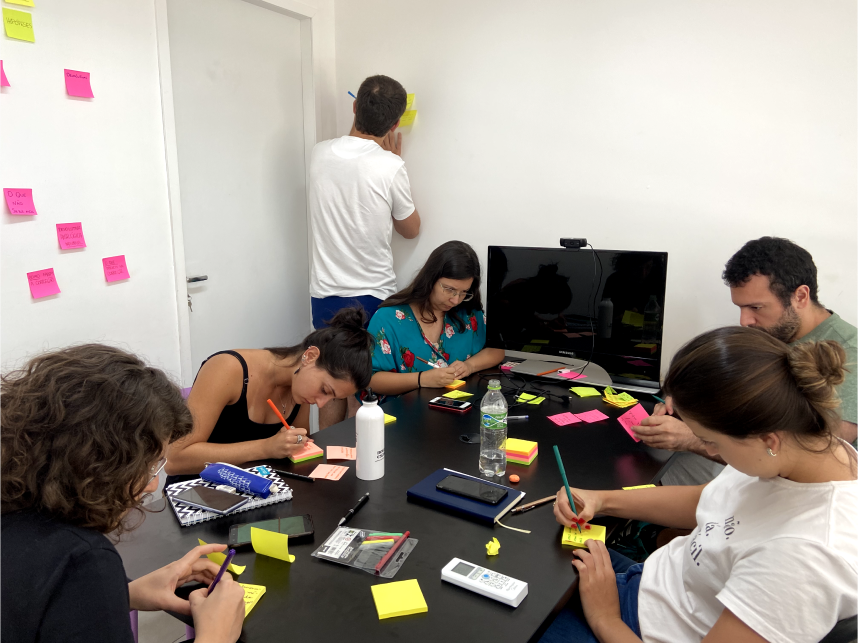
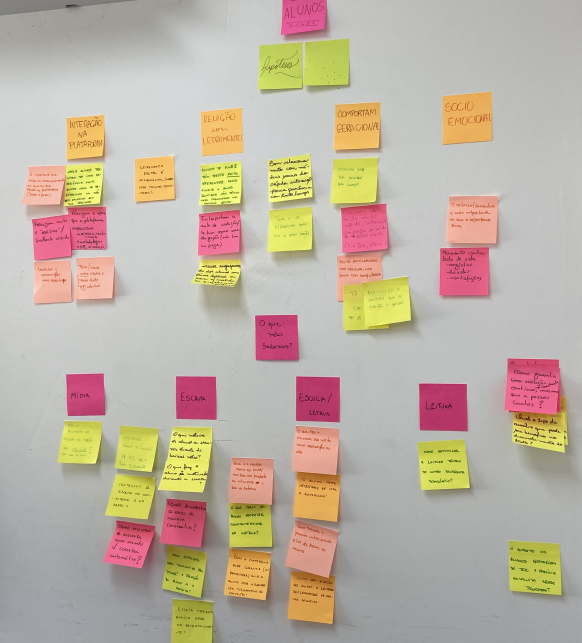
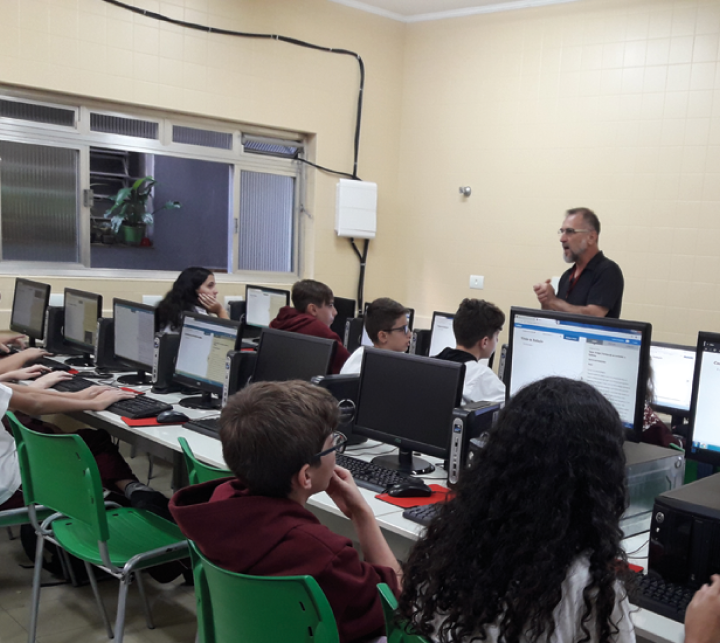
Luckily we had a lot of teachers inside the company to help us build what would be interesting for this product. But more than this we also spoke with teachers from our school partners and used a lot of desk research with data we found. All this created our first round of Certainties, Suppositions & Doubts.
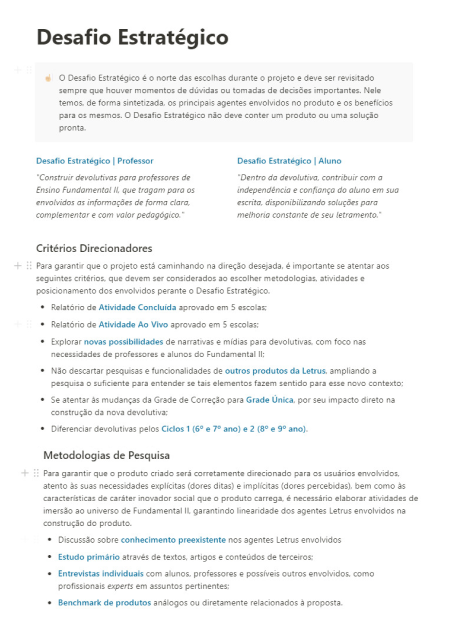
This research led us to collecting many data about the scenario we where working with. We used the Human Centered Design methodology to define our Challenge, both for teachers and students. We also defined ways of measuring the success of our solution, and what would be our next steps on the project.
We understood that our main challenges related to teachers where:
Classes from primary schools in Brazil don’t have a particular way to evaluate textual production, as students in high school using Enem method of evaluation. Teachers used to correct text using their own means and no pattern existed in that. We would need to have our own way of evaluate the textual production.
Portuguese teachers didnt have many knowledge about technology because they never tought about using that in their classes. Even in private schools, the hours in digital labs where always occupied by chemistry or math teachers.
Teachers are used to be saturated and they dont trust in other teachers to correct the textual production of their classes, because they are the ones who knows their students. As they believed.
These teachers are particularly careful because they are working with children in a very creative period. They don’t want to cut their creativity but sometimes they need to orientate them.
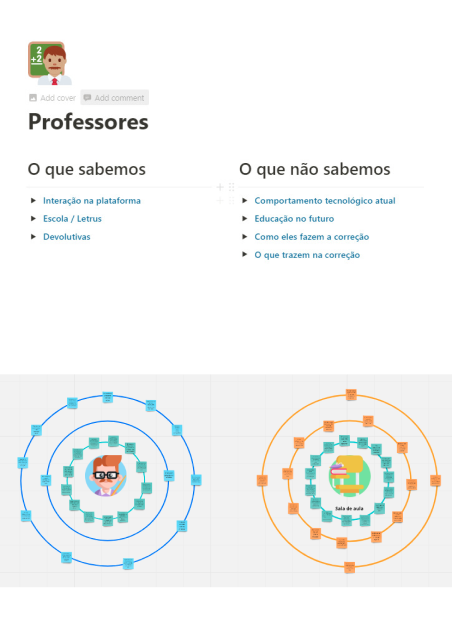
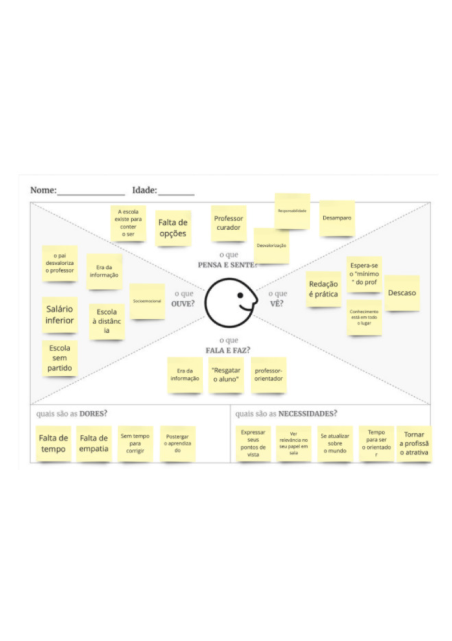
At this point was important to build a journey map using their current scenario and understanding their main points of pain. Then we started to understanding how and when our solution could help. We also made a prioritizating process along with stakeholders and PM’s and created User Stories to start drawing the solution.
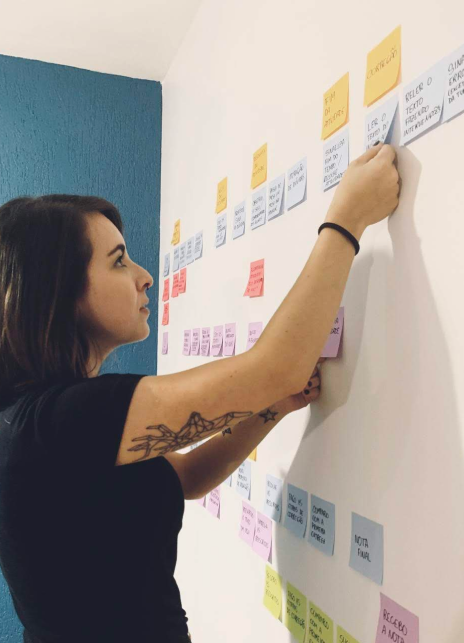
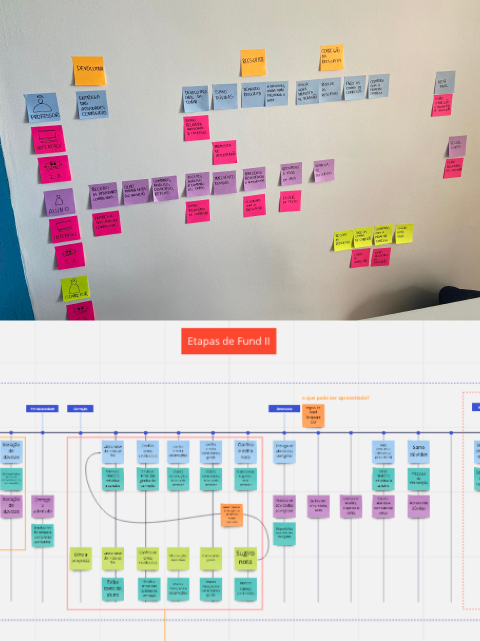
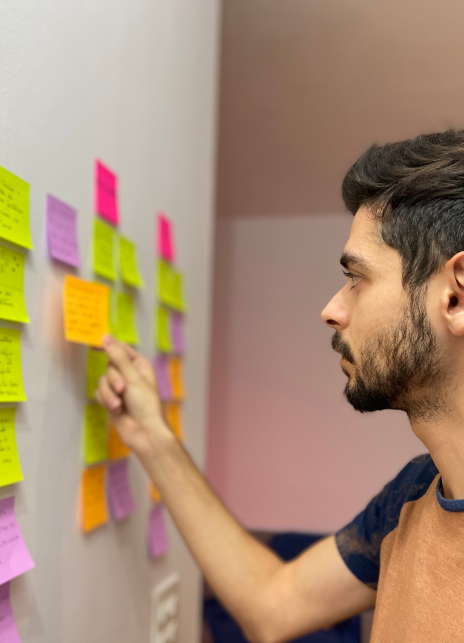
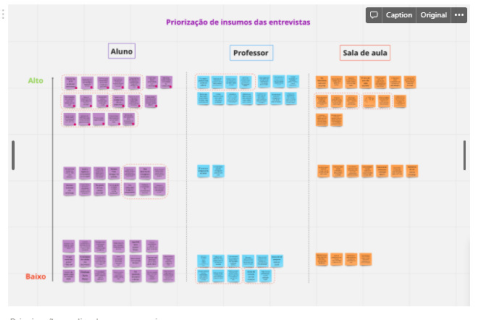
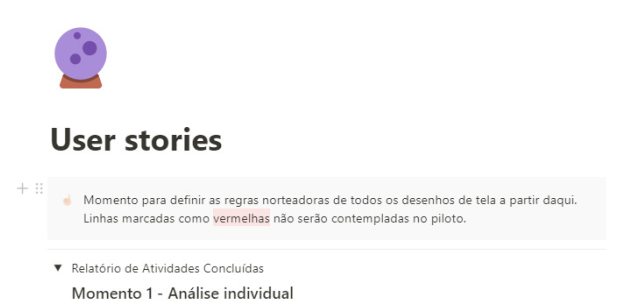
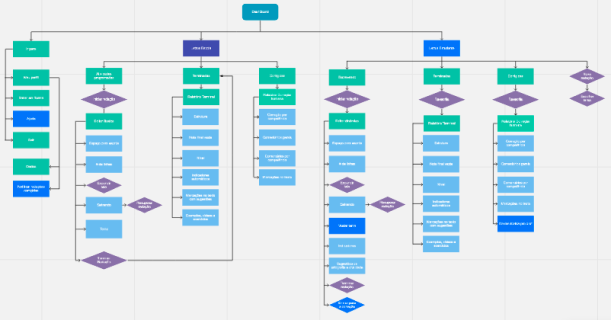
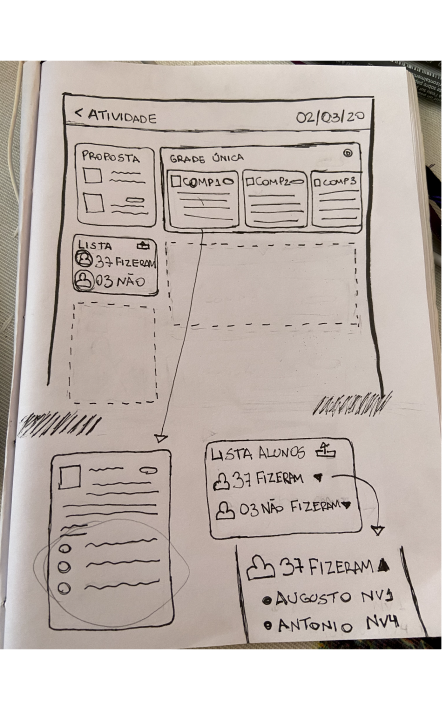
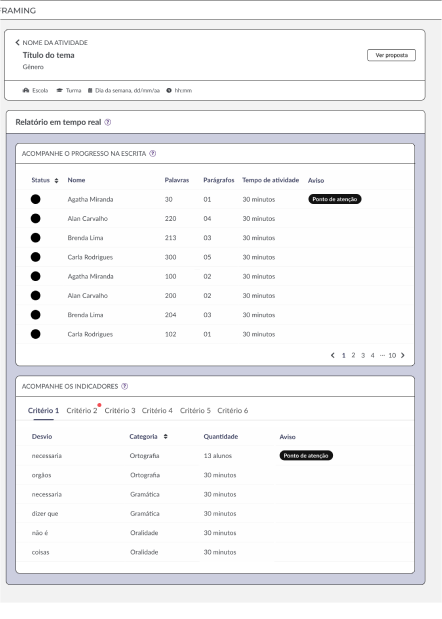
We passed by all the steps of drawing a solution. The first Sketches helped us to improve the solution fast, while putting the team together to create with us. We conducted crazy 8 with developers, PM’s, teachers and customer support to reach the best solutions. During low fidelity wireframes, we could make corrections of UX Writing, which was specially important for a Portuguese teachers platform. And in high fidelity, we could apply the Design System and make User testing to understand gaps in the experience.
Solution
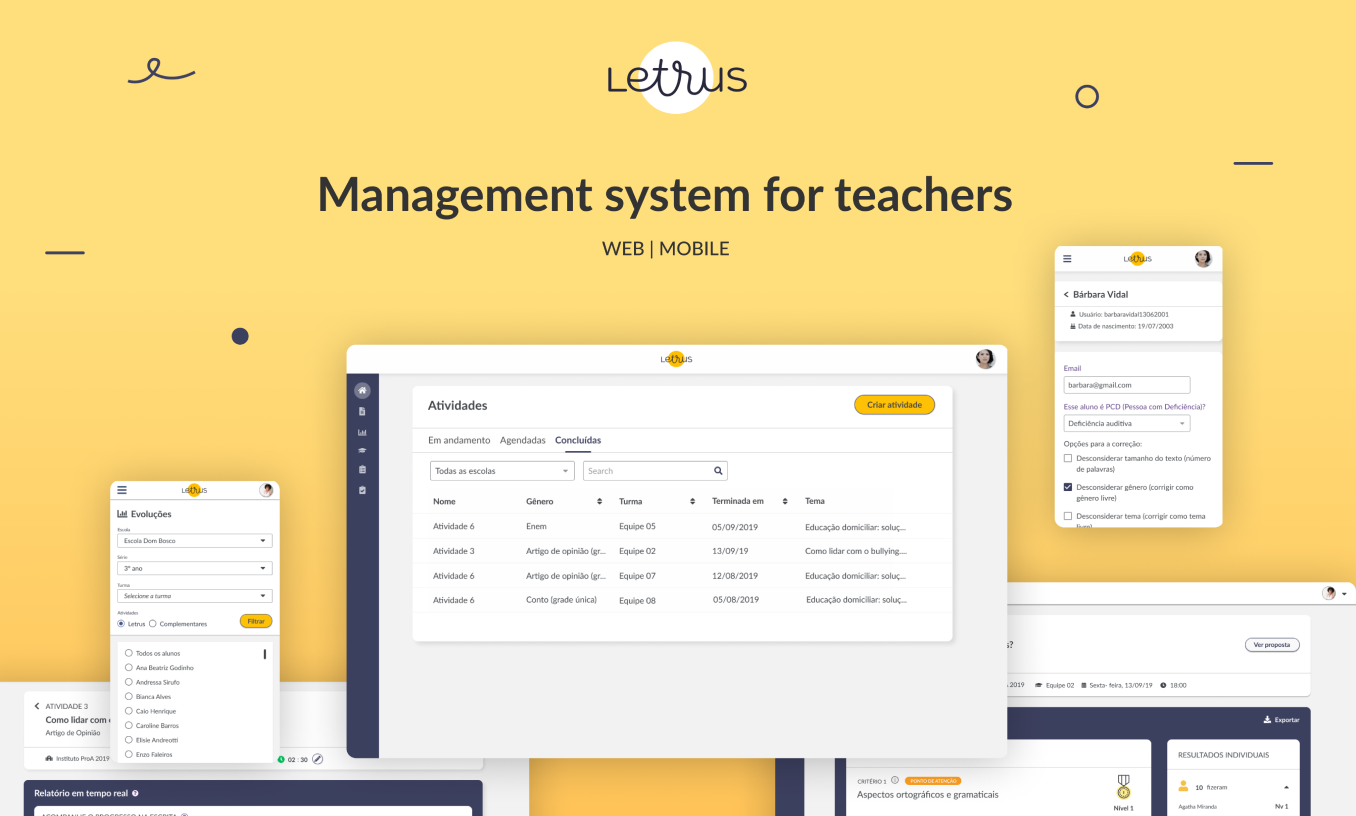
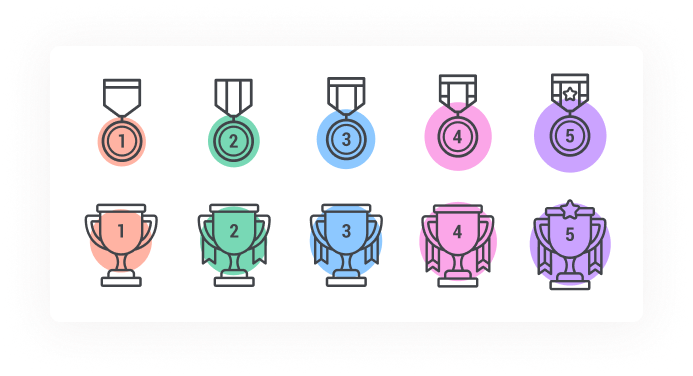
One of our discoveries was that elementary school children respond better to more playful progression markers, and we chose to use medals and trophies to encourage them in addition to numerical grades. This strategy also benefited the relationship between students and teachers, with a ludic environment that they could use in class.
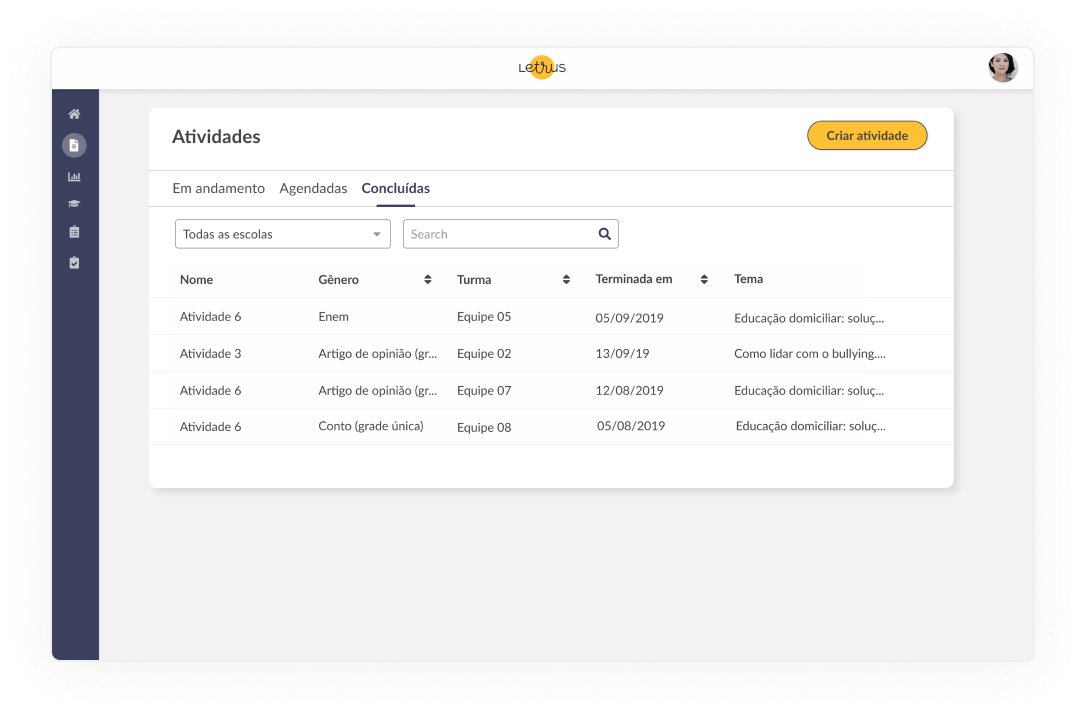
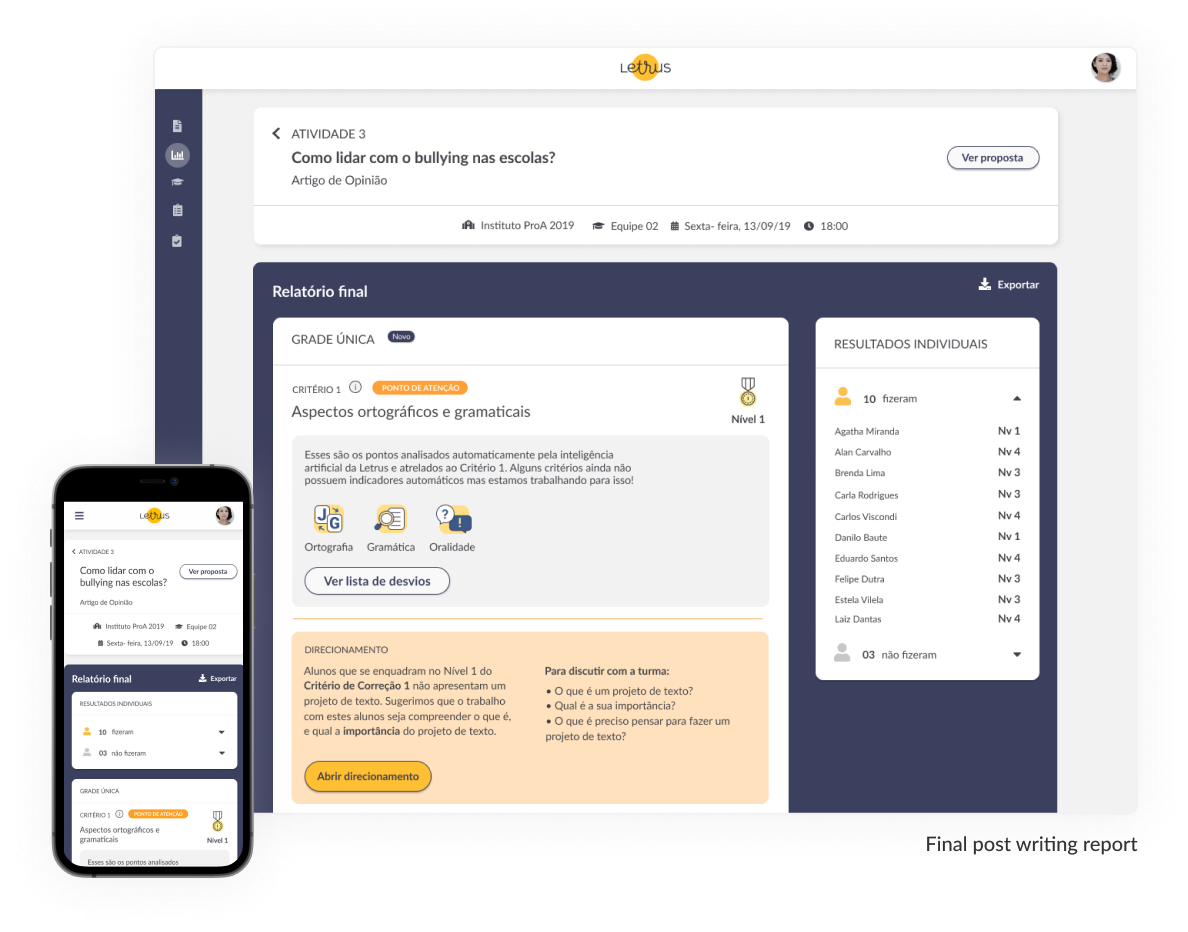
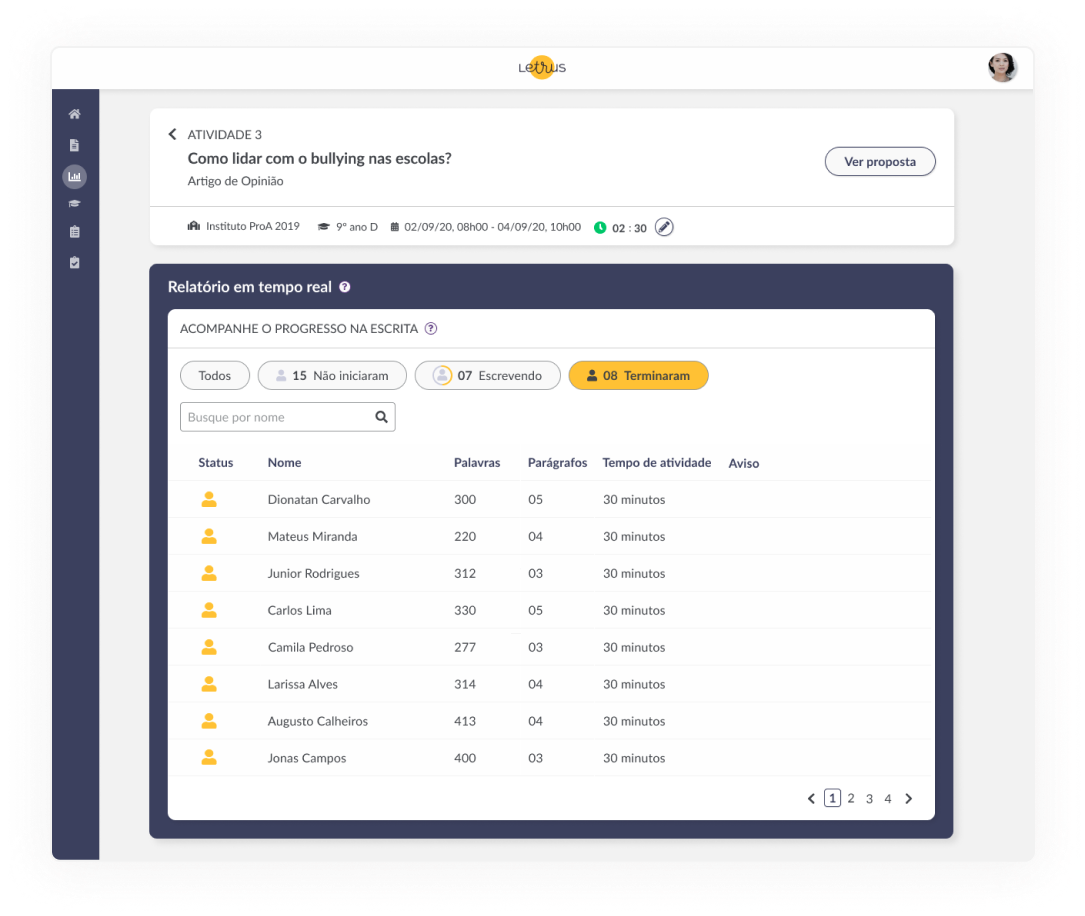
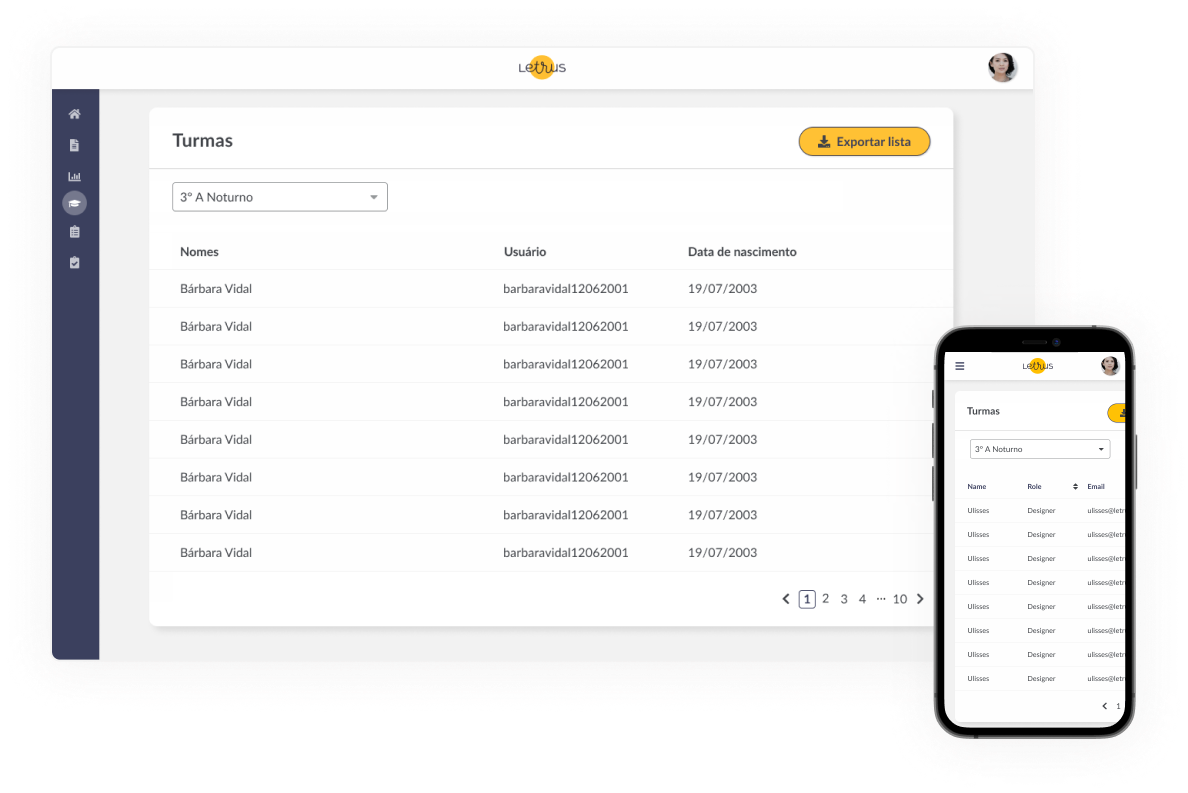
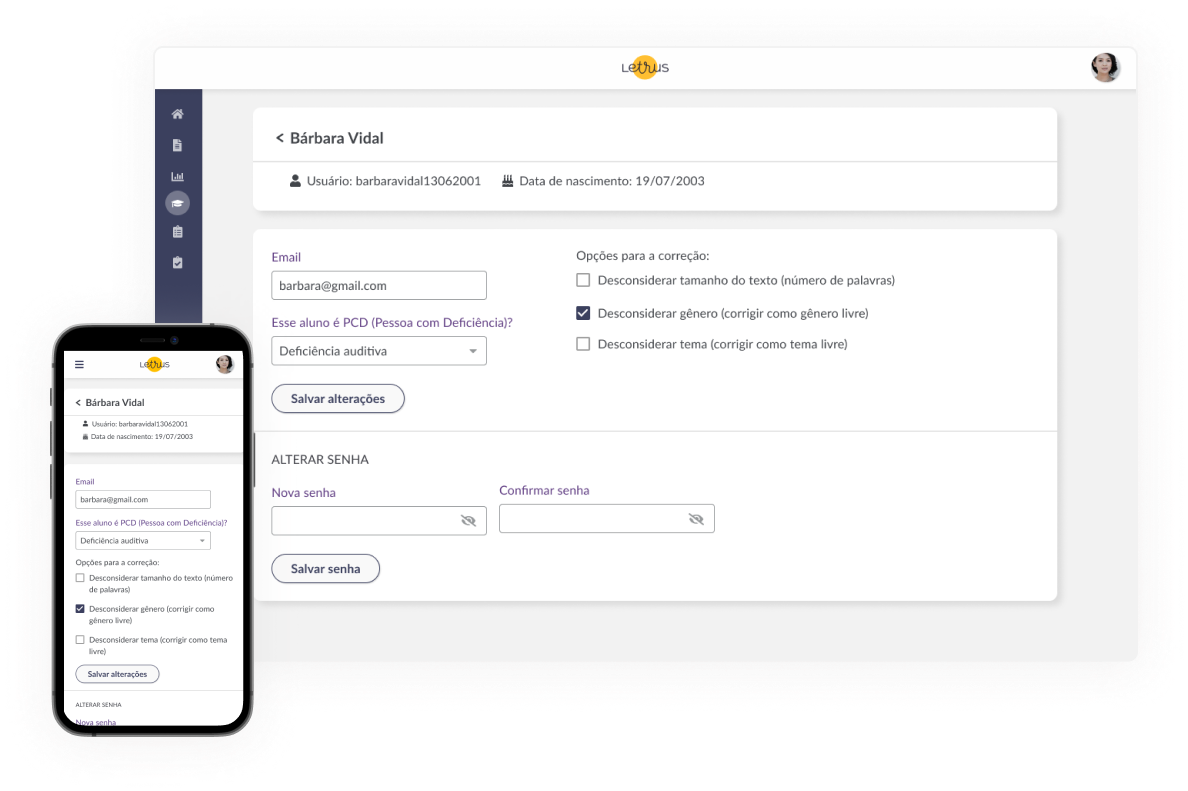
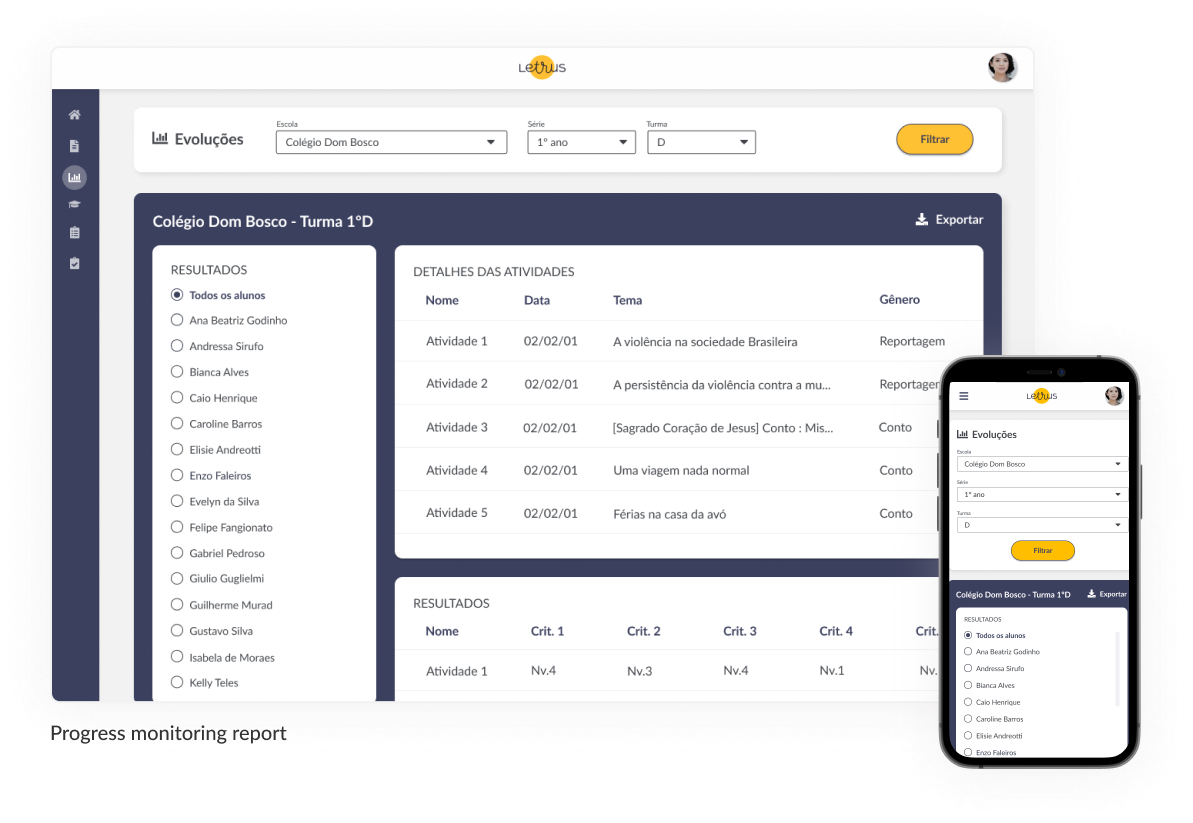
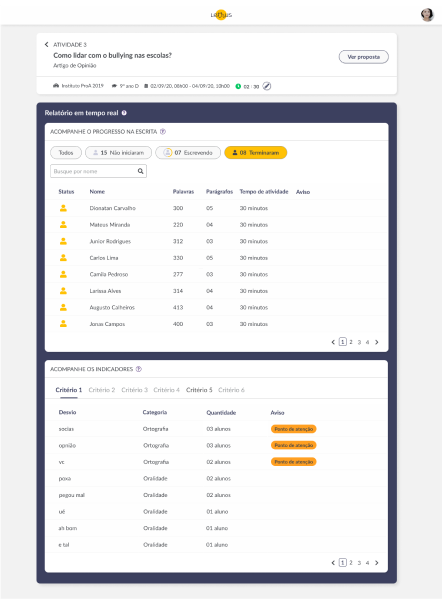
This screens are a demonstration of how teachers interface should look at the end of implementation process. It mostly shows reports of students works. The teachers also could have access to reports real-time, during students writing. It’s a new and innovative way of thinking and conducting a class and something that was never designed before in this context.
At the end of the journey
It was a big challenge that required a lot of organization, creativity, resilience and teamwork. It took us six months to release this new project, due the complexity of its variables. But we were very excited because we could see the students and teachers evolution daily with our partners.
For elementary classes we understood that our product would start as a small part of larger journey that happens in classes. Even though, it would have a big impact in all the involved users. With time, and technology presence growing in schools, we could present ourselves as a much more robust solution, building a path since early ages until university, making our country more empowered with the ability of writing.
Learnings
Take into consideration the user's visual universe, even if this universe is not digital.
Involve the team since the beggining. Talk to customer support, they have good ideas of how to resolve user's issues.
A design system will help you gain a lot of speed but still don't skip the sketching and low fidelity steps.
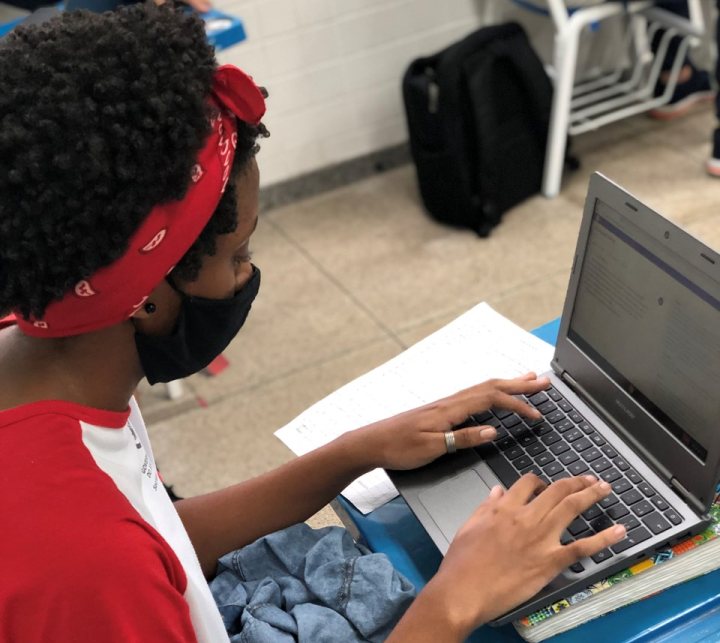
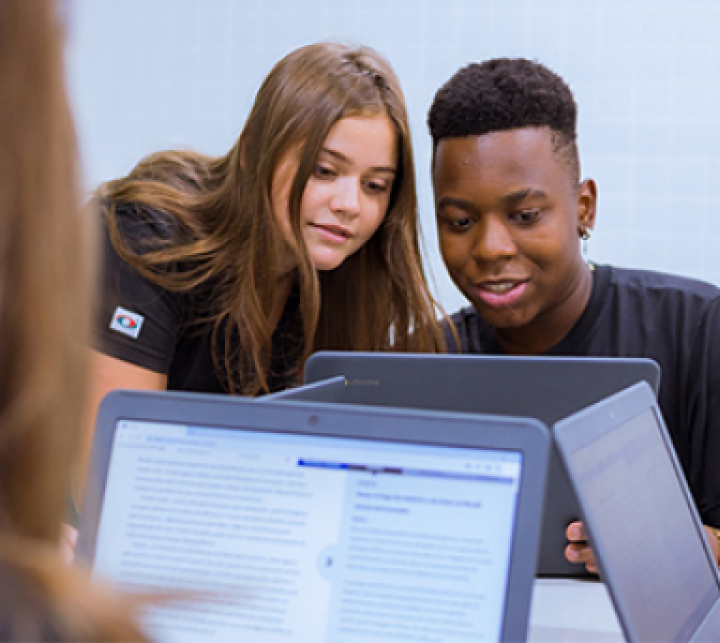
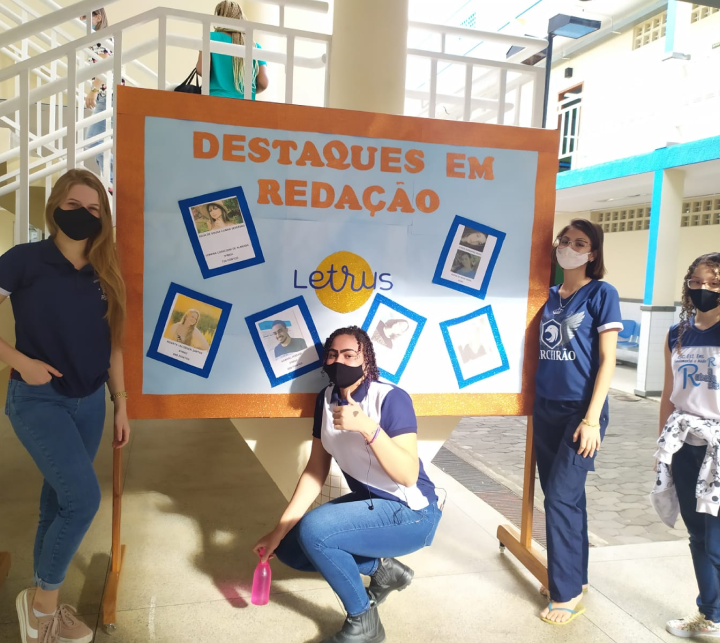
I’m not working with Letrus anymore, but the project is still impacting the education in Brazil and I’m always very proud of them.